

In historical forecasting, you must reflect on your past performance within a specific time frame and assume that your future performance will be equal or superior. Using opportunity stage forecasting, the entire pipeline is broken down into various stages. You can use the value assigned for each lead to estimate revenue results for your current sales pipeline and identify necessary adjustments needed. Long-term forecasting looks beyond the immediate future, typically projecting sales over five years or more. Short-term forecasting is particularly valuable for businesses experiencing rapid changes in market dynamics or demand fluctuations.
How to Hire an SDR to Handle Cold Emailing at Your Company?
- Sales forecasting plays a vital role in helping businesses manage their budgets, ensuring they have enough resources to invest in new products and services.
- For example, you can collaborate with the sales team to gain insights into market trends, customer feedback, and any challenges they are encountering.
- The formation of such teams reflects a company’s evolution toward a data-driven forecasting process, ensuring accurate forecasts that drive strategic planning.
- Choosing the right sales forecasting method is equally important as the forecast itself.
- Ensuring data accuracy should be a top priority for any company aiming to improve forecast accuracy.
By leveraging a CRM tool, companies can improve their forecasting accuracy and make data-informed decisions. Multivariable sales forecasting gives you the insight to change your sales and marketing strategies to achieve your sales goals. It is a question here of a company using the data corresponding to its past sales to make predictions concerning future performance.

Customer Success

Combining short-term forecasting accuracy with long-term strategic planning ensures businesses can navigate immediate challenges while staying focused on achieving their future sales targets. Sales forecasting is ideal for organizations that need to monitor sales performance closely and adjust their strategies in real time. It helps sales teams predict future sales within manageable time frames, ensuring efficient resource allocation and accurate forecasts. Sales forecasting has become a cornerstone of modern sales strategy, frequently appearing in countless articles, LinkedIn posts, and influencer blogs. Despite its widespread discussion among industry experts and the wealth of resources available, many organizations still struggle to achieve accurate sales forecasts.
Using Historical Data
Qualitative approaches involve analyzing data and insights that are non-numerical, which seeks to uncover meaning and underlying motivations of behavior. Inventory-based businesses need to meet customer expectations to provide organizations usually use only one method for forecasting sales. them with a positive experience. For example, research shows that nearly half of consumers are willing to wait two days or less for a delivery, while 20% say they would wait for up to four days. If an inventory-based business is not stocking the correct amount of inventory, customers might experience delays, which could lead them to have a negative experience.
The Importance of Sales Forecasting
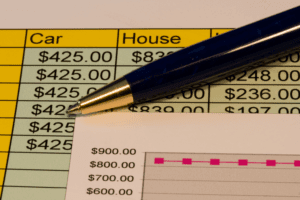
Then evaluate different forecasting methods to see what suits your business. The forecasting method of Test-Market Analysis allows you to roll out your product or service to a specific set of people depending on their demands. You can use the rollout findings to produce a more accurate future market projection. This form of forecasting is objective because it does not rely on the emotions of your sales staff. It is ideal for businesses to track when new customers will enter their sales pipeline and when the deal will close. Are you forecasting a specific product, market segment, or the overall business?
- In this guide, we cover how parallel dialers enhance sales efficiency by dialing multiple numbers simultaneously, connecting reps only to live prospects.
- Companies can focus on different segments of their business to come up with an educated guess about what they need to continue or stop doing to alter future results.
- This means the ability to predict future sales performance has a great influence on your marketing strategies.
- Lead-driven forecasting helps sales teams prioritize high-potential leads and allocate resources more effectively.
- To learn more about other sales forecasting methods and explore real examples, download the eBook “13 Sales Forecasting Methods.
Forecasting based on Historical data
Today’s shifting economy means revenue leaders have to do more with fewer resources. Instead of spending anxious hours on manual forecasts, modern revenue leaders are embracing ways to save time and refocus their energy on growing revenue. It’s true that choosing the right method is a crucial part of gaining valuable, accurate forecasts. But the right method will only get you so far if you don’t https://www.bookstime.com/articles/gross-margin-ratio have tools that offer transparency, reliable data, and the ability to fix potential issues before it’s too late. Regression analysis can be particularly useful for identifying trends and making data-driven decisions. However, it’s essential to ensure that the data used is clean and accurately reflects the variables affecting your sales.
- The team members will base their answers on their experience and expertise, but it’s still a very subjective estimation.
- In some markets, particularly in business-to-business markets, research companies ask customers how much they plan to spend in the coming year on certain products.
- Time series analysis in sales forecasting uses data collected at various time intervals to track changes over time.
- Choose the appropriate forecasting methods based on your objectives, data availability, and the nature of your business.
- Staying informed about economic indicators helps businesses adjust their forecasts to reflect these changes.
- Sales organizations have to make calls like this all the time, so make yours and move on.
How to Hire a BDR to Boost Sales at Your Company?

Without a sales history, creating accurate sales forecasts can be challenging. Sales forecasting is a critical aspect of strategic planning and revenue management, retained earnings balance sheet but there’s no universal solution. The ‘one size fits all’ approach simply doesn’t apply to sales forecasting methods. From my own experience, sales forecasting has always been a challenging yet essential task. The ability to predict future sales not only drives strategic planning but also ensures better resource allocation, budget planning, and revenue forecasting. However, mastering sales forecasting requires more than just intuition—it demands time, effort, internal buy-in, and the right sales forecasting software.